

CS 1.6 refuses to die
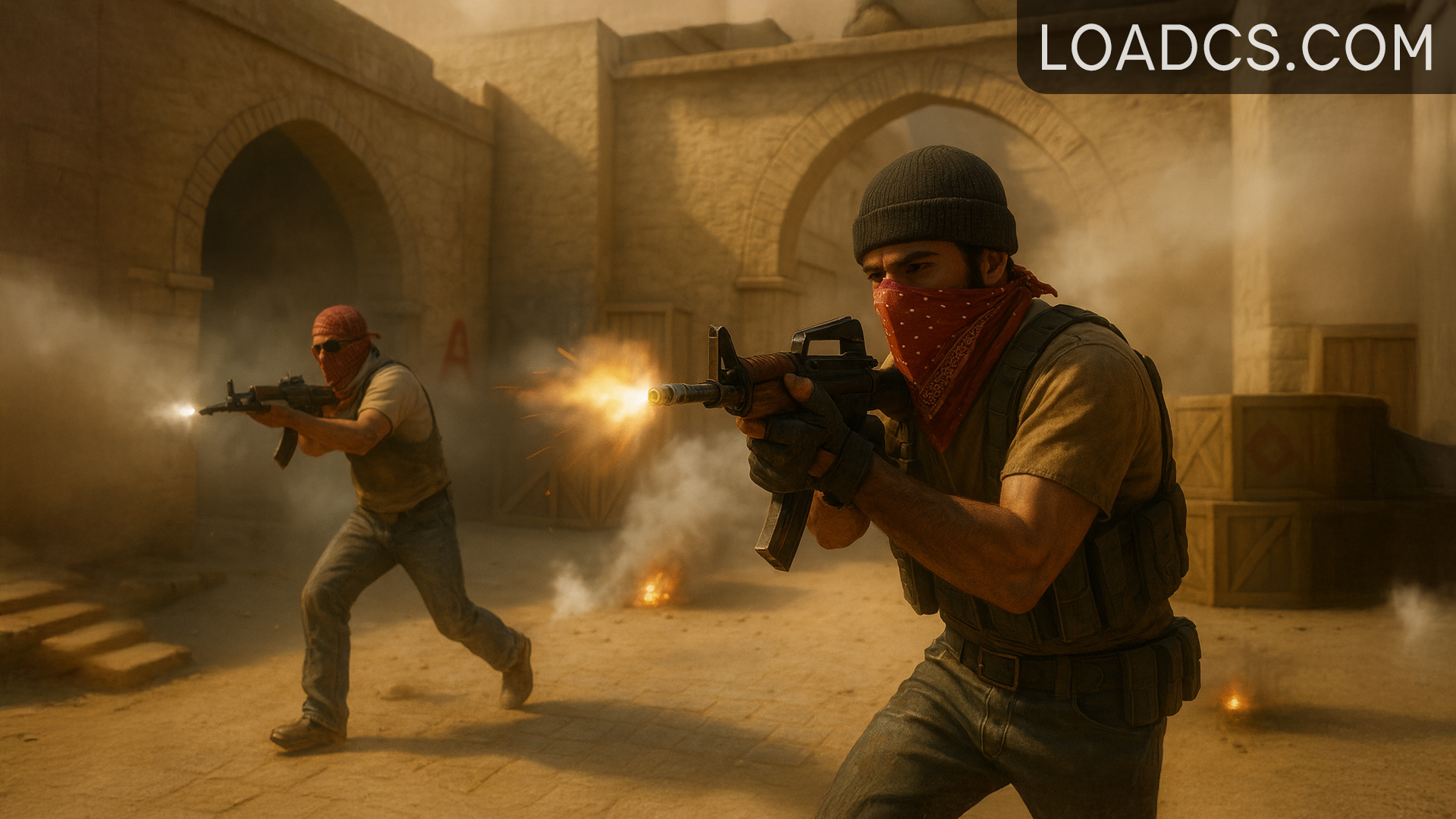
Counter-Strike 1.6 isn’t just an old game that people keep around for nostalgia’s sake—it’s the template that taught a whole generation what a competitive FPS should feel like. Born as a Half-Life mod in 1999 and hardened by a million café matches and bedroom scrims, CS 1.6 distilled team play, economy, and mechanical mastery into something so lean that it still feels modern today. If you’ve never touched it, you’re looking at the ancestor of most tactical shooters. If you grew up on it, you know there’s a specific rhythm—of footsteps, bursts, and bomb ticks—that no other game reproduces quite the same way.
Below is a long, no-fluff tour through what makes 1.6 special: where it came from, how it plays, what skills it actually rewards, why it became an esport before “esports” was a word, and how to appreciate it in 2025 without treating it like a museum piece.
Two hobbyists, Minh “Gooseman” Le and Jess Cliffe, didn’t intend to rewrite multiplayer shooters; they just iterated relentlessly. The early betas were scrappy: a handful of real-world guns, a few bomb-defuse and hostage maps, and a pace closer to SWAT than Quake. Every update tightened timings, recoil, money flow, and round structure. When Valve adopted the mod and rolled it into the GoldSrc engine officially, Counter-Strike 1.0 in 2000 put it on every LAN in the world. “1.6” (2003) is the last and most played pre-Source version—essentially the community’s settled canon.
What set CS apart then (and still does) is constraint. No respawns mid-round. No power fantasy streaks. Utility is limited to a smoke, an HE grenade, and up to two flashes. The money you spend now shapes the next two rounds. Victory is not about racking kills; it’s about completing a task (plant/defuse or rescue/hold) with small tools and big discipline. Those constraints produce a depth that flashier games keep trying—and mostly failing—to replicate.
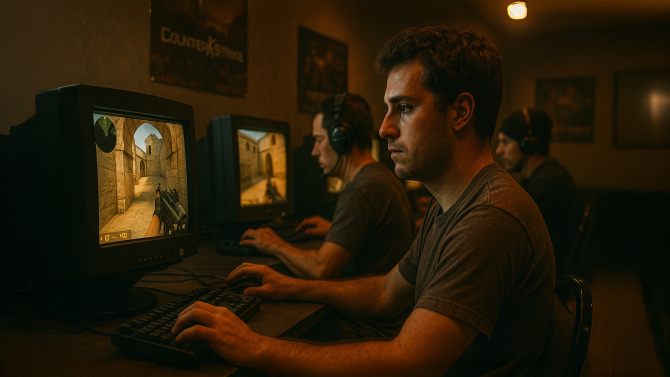 CS 1.6 looks simple until you try to move like a veteran. Acceleration is snappy, friction is high, and momentum matters. Crouch-peeking, stutter-stepping, quick-stopping—these micro-moves are baked into how bullets register. Bunnyhopping and air-strafing exist, but they’re not Quake-style speed exploits; they’re tight, timing-sensitive techniques for shaving milliseconds, widening peeks, or silently repositioning.
Recoil in 1.6 is a living thing. Each weapon has a rough “pattern,” but the game punishes greed. The golden rule is burst or die: 2–3 bullets with a micro-reset, never “drag down and pray.” The AK-47 and M4A1 reward first-bullet precision; the AWP is a commitment device—amazing if you post and punish, a liability if you swing like a rifler. Sidearms aren’t consolation prizes: the Desert Eagle turns ecos into coin-flip rounds in the hands of a calm aimer.
Old school players still argue about rates and interp values because they shaped muscle memory. On good servers, set sane values (historically: rate 25000, cl_cmdrate 101, cl_updaterate 101, fps_max 101) and you get that crisp, surgical feeling—shots breaking exactly when your crosshair freezes, not when an animation says so. 1.6 is unforgiving; it rewards the invisible discipline of letting your velocity hit zero for a split-second before clicking.
The economy game: the real match starts in the shop. CS invented the “buy round vs. eco vs. force” conversation the wider genre now treats as gospel. Every five seconds in the shop is an argument with your future:
Pistol/first round sets the money ladder. Win it, you often snowball to 3-0 with SMGs and rifles. Lose it, you decide between a disciplined save or a scrappy force with armor and upgraded pistols.
Full buys are planned, not improvised. It’s not just “rifles + armor”; it’s “do we have enough flashes and a smoke to execute B?” One missing smoke can cost a round more than a missing rifle.
The AWP tax is real. If your star can convert 1–2 opening picks per round, it pays for itself. If not, you’ve sunk $4750 and probably your mid-round utility.
The best calls often look boring: five deagles to threaten headshot angles, or five full saves to build a double-AWP next round. Boredom wins leagues.
Ability to play CS 1.6 with bots and as a multiplayer also added, making the game much more versatile and enjoyable for all types of players. Those who prefer offline practice or simply want to sharpen their shooting skills can battle against bots with adjustable difficulty levels, while those seeking the full Counter-Strike experience can dive into multiplayer matches against real opponents.
de_dust2 teaches defaulting and retake geometry: control of Long A and Mid is a negotiation that spans the half.
de_inferno teaches utility discipline in chokepoints and the art of trading in narrow fights.
de_nuke teaches verticality, sound, and fakes: a footstep ramp can pull rotations from the lower site.
de_train (1.6 variant) teaches off-angles and punishing poor spacing across open lanes.
cs_assault shows how hostage maps compress time and force decisive counter-utility.
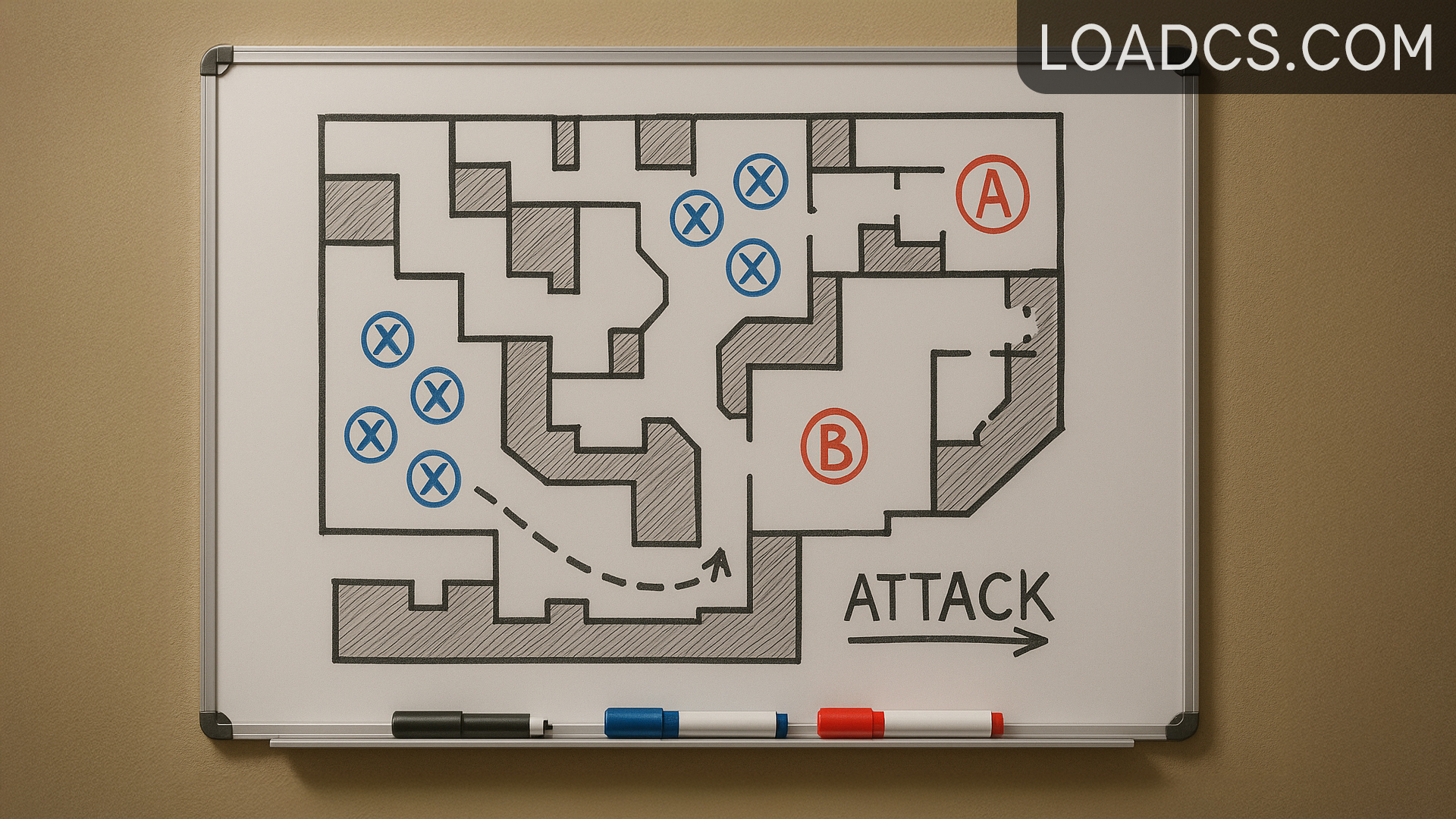
What makes them iconic isn’t nostalgia—it’s clarity. These layouts turn good decisions into wins and bad spacing into preventable deaths. They produce repeatable drills: jump-spot here, pre-aim there, pop-flash this corner, wide-swing that box.
Crosshair placement: The cheapest aim buff in CS history. Slide your crosshair along head height where a model will appear, not where it is. It turns flicks into taps and panic into routine.
Sound discipline: Walking, reloading, ladder use—sound is information leakage. In 1.6, audio is crisp; careless steps write your obituary. Good players bait sound as often as they punish it.
Peeking theory: Shoulder peeks to draw shots, jiggles to bait the AWP, and “wide with intention” when you know the holding angle is tight. Most deaths come from half-measures.
Trading: Enter in pairs. The first man reveals information; the second converts. CS rewards teams that turn a 50/50 into a 70/30 by spacing and timing alone.
Round and clock literacy: Bomb timer, rotation paths, CT economy—knowing when to save is the mark of a grown-up caller. If a 1v3 costs three rifles and a kit, drop the ego and carry money into the next round.
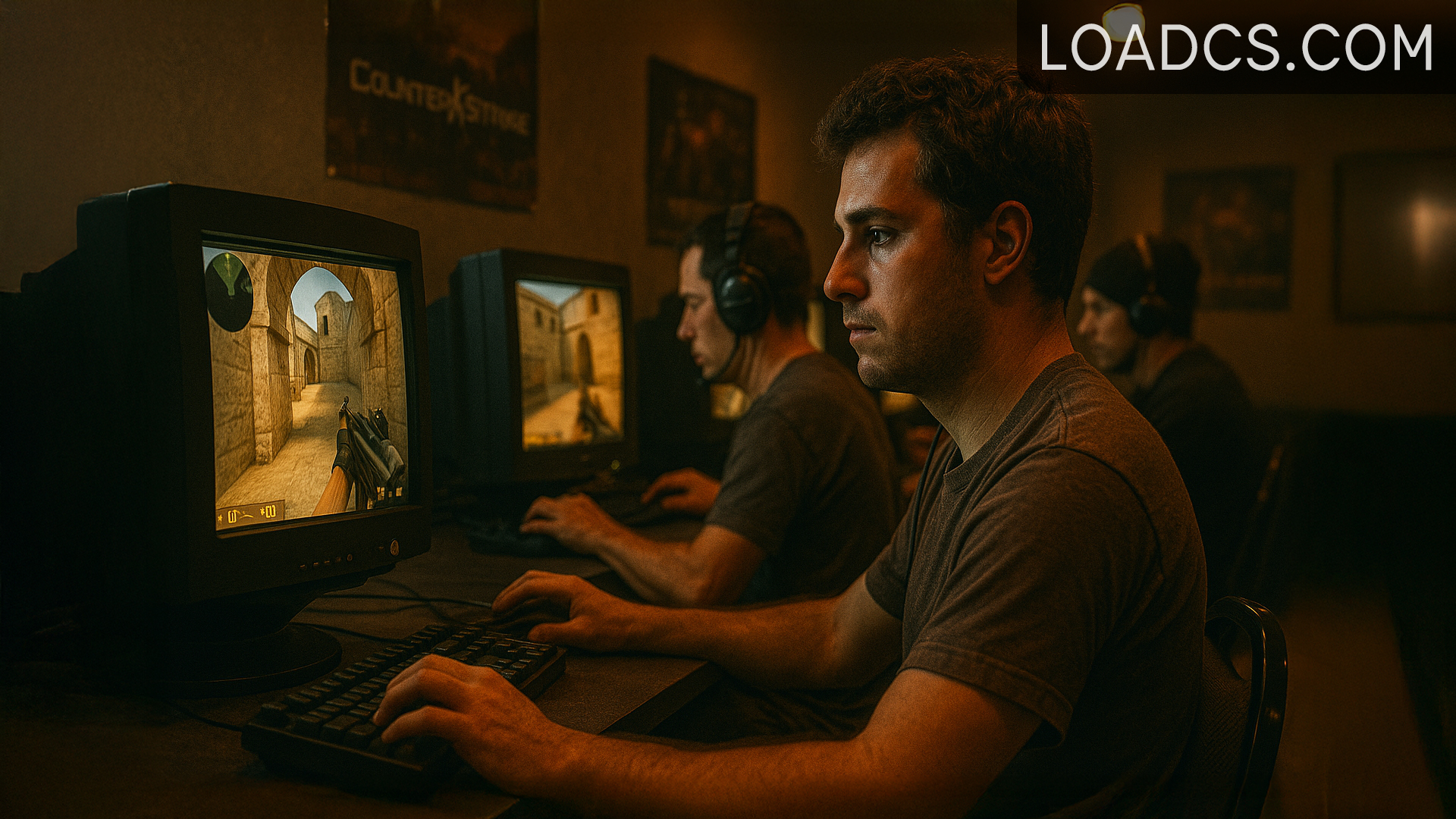
The culture: LAN cafés, HLTV, and the birth of esports. Before streaming, there was HLTV—spectator relays that let thousands watch a top match from any angle. Forums posted nightly demo packs, and kids studied configs like sacred scrolls. Leagues like CPL, ESWC, WCG, and IEM built circuits where names like NEO, f0rest, GeT_RiGhT, markeloff, SpawN, and walle became foundational legends. Strats were hand-drawn on JPEGs; VODs were fragmovies, not broadcasts; teams built eras on discipline and a few set pieces no one else could run as cleanly.
That café culture matters. Five people sharing a table learn real spacing, nonverbal timing, and the cadence of confidence after a clutch. Modern games give you a party system; 1.6 trained you to become a team. 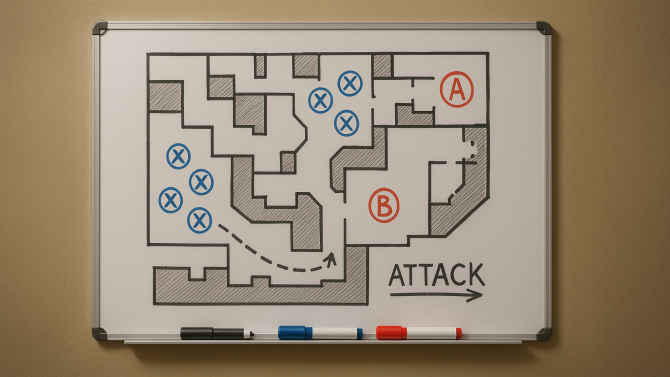 Mods and sub-cultures that kept the lights on
If vanilla 5v5 was the backbone, the servers list was the bloodstream. A lot of players never touched “proper” CS, yet they kept 1.6 thriving:
GunGame / Deathmatch for raw aim reps.
KZ/Climb for movement addicts—perfecting strafes, bhops, and weirdly zen control.
Surf turned the physics model into a sport of its own.
Jailbreak, Zombie Plague, Hide & Seek, Deathrun—social sandboxes built on trust and light rules.
Those sub-modes weren’t distractions; they trained micro-skills and gave the game a second life between scrims. A night of Surf sharpens air control; a week of KZ reforms your peeking balance.
Why it aged better than most shooters
Readable art and sound
Low-poly models, flat lighting, sharp gunshots. Visual noise is minimal, so information density stays high. You see what matters.
Low system demands
Any humble machine can run it, and high FPS translates directly into control. No slider circus. Just input → output.
Tight round loop
The 1:45 pace with a simple objective still beats modern “do everything” sandboxes. Scarcity is the point.
Skill permanence
The muscles you build—stopping before shooting, crosshair discipline, trading—port to any tactical shooter. CS 1.6 is a fundamentals gym.
Practical tips for playing in 2025:
Bind your buys. The shop is a time sink. Use aliases/binds to buy your rifle, armor, and nades instantly so you can throw an early round flash without fumbling.
Standard rates and FPS. Aim for stable high FPS (fps_max 101) and sensible network rates on a reputable server; consistency beats peak numbers.
Train smart, not long. Ten minutes of pure crosshair placement on common angles (Dust2 Long, Mirage-esque mid—many servers host legacy aim maps) is better than two hours of unfocused pubbing.
Demo review is king. Watch your own clutches and deaths. Ask “why was I there?” more than “could I have hit the shot?” Positioning habits decide series.
Respect utility. Two flashes and a smoke win more rounds than a greedy second rifle on a thin buy. 1.6 grenades are deceptively strong when timed.
Maybe the purest bit of game design in CS is the C4 timer. Every beep is a tempo mark. It makes cowards brave and heroes patient. You plant, you fall back to a crossfire, you let the clock do defense’s work. If CTs smoke the bomb early you don’t panic—you burn their kits with a pop-flash and a swing. If they fake the defuse, you resist the scream in your hands and peek late. The bomb creates story beats without a single cutscene. That’s why strangers remember round numbers from years ago like they’re birthdays. 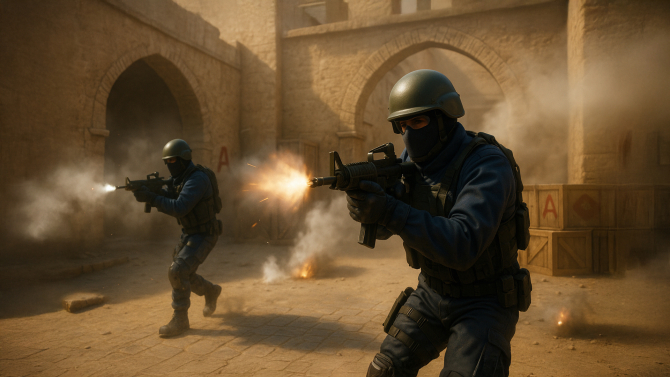 What keeps people coming back
Clarity of purpose. No gimmicks. You can explain the entire game to a new player in one minute, then spend a decade mastering it.
Community ritual. Same maps, same calls, same pistol metas—comfort without stagnation, because skill keeps resetting the conversation.
Mechanical honesty. If you died, you probably walked too loud, peeked too narrow, or shot while moving. That sting is addictive because it feels solvable.
Counter-Strike 1.6 is lean steak—no sauce, no garnish, just the flavor of decisions executed under pressure. If you’re new, treat it like a craft: learn head-height, learn when to stop, learn to trade, learn the bomb. If you’re a veteran, you don’t need convincing. You know that the best rounds end with four people alive, a defuse with one second left, and a team quietly resetting utility for the next call—because in CS 1.6, the most beautiful thing isn’t a montage shot. It’s five players doing the simple thing perfectly.
Below is a long, no-fluff tour through what makes 1.6 special: where it came from, how it plays, what skills it actually rewards, why it became an esport before “esports” was a word, and how to appreciate it in 2025 without treating it like a museum piece.
Two hobbyists, Minh “Gooseman” Le and Jess Cliffe, didn’t intend to rewrite multiplayer shooters; they just iterated relentlessly. The early betas were scrappy: a handful of real-world guns, a few bomb-defuse and hostage maps, and a pace closer to SWAT than Quake. Every update tightened timings, recoil, money flow, and round structure. When Valve adopted the mod and rolled it into the GoldSrc engine officially, Counter-Strike 1.0 in 2000 put it on every LAN in the world. “1.6” (2003) is the last and most played pre-Source version—essentially the community’s settled canon.
What set CS apart then (and still does) is constraint. No respawns mid-round. No power fantasy streaks. Utility is limited to a smoke, an HE grenade, and up to two flashes. The money you spend now shapes the next two rounds. Victory is not about racking kills; it’s about completing a task (plant/defuse or rescue/hold) with small tools and big discipline. Those constraints produce a depth that flashier games keep trying—and mostly failing—to replicate.
Recoil in 1.6 is a living thing. Each weapon has a rough “pattern,” but the game punishes greed. The golden rule is burst or die: 2–3 bullets with a micro-reset, never “drag down and pray.” The AK-47 and M4A1 reward first-bullet precision; the AWP is a commitment device—amazing if you post and punish, a liability if you swing like a rifler. Sidearms aren’t consolation prizes: the Desert Eagle turns ecos into coin-flip rounds in the hands of a calm aimer.
Old school players still argue about rates and interp values because they shaped muscle memory. On good servers, set sane values (historically: rate 25000, cl_cmdrate 101, cl_updaterate 101, fps_max 101) and you get that crisp, surgical feeling—shots breaking exactly when your crosshair freezes, not when an animation says so. 1.6 is unforgiving; it rewards the invisible discipline of letting your velocity hit zero for a split-second before clicking.
The economy game: the real match starts in the shop. CS invented the “buy round vs. eco vs. force” conversation the wider genre now treats as gospel. Every five seconds in the shop is an argument with your future:
Pistol/first round sets the money ladder. Win it, you often snowball to 3-0 with SMGs and rifles. Lose it, you decide between a disciplined save or a scrappy force with armor and upgraded pistols.
Full buys are planned, not improvised. It’s not just “rifles + armor”; it’s “do we have enough flashes and a smoke to execute B?” One missing smoke can cost a round more than a missing rifle.
The AWP tax is real. If your star can convert 1–2 opening picks per round, it pays for itself. If not, you’ve sunk $4750 and probably your mid-round utility.
The best calls often look boring: five deagles to threaten headshot angles, or five full saves to build a double-AWP next round. Boredom wins leagues.
Ability to play CS 1.6 with bots and as a multiplayer also added, making the game much more versatile and enjoyable for all types of players. Those who prefer offline practice or simply want to sharpen their shooting skills can battle against bots with adjustable difficulty levels, while those seeking the full Counter-Strike experience can dive into multiplayer matches against real opponents.
«What makes them iconic isn’t nostalgia—it’s clarity»
Maps as teachers: Dust2 is a course, not a location. CS 1.6 maps are carved into memory like scales for a pianist. Each “classic” teaches a specific lesson:de_dust2 teaches defaulting and retake geometry: control of Long A and Mid is a negotiation that spans the half.
de_inferno teaches utility discipline in chokepoints and the art of trading in narrow fights.
de_nuke teaches verticality, sound, and fakes: a footstep ramp can pull rotations from the lower site.
de_train (1.6 variant) teaches off-angles and punishing poor spacing across open lanes.
cs_assault shows how hostage maps compress time and force decisive counter-utility.
What makes them iconic isn’t nostalgia—it’s clarity. These layouts turn good decisions into wins and bad spacing into preventable deaths. They produce repeatable drills: jump-spot here, pre-aim there, pop-flash this corner, wide-swing that box.
Crosshair placement: The cheapest aim buff in CS history. Slide your crosshair along head height where a model will appear, not where it is. It turns flicks into taps and panic into routine.
Sound discipline: Walking, reloading, ladder use—sound is information leakage. In 1.6, audio is crisp; careless steps write your obituary. Good players bait sound as often as they punish it.
Peeking theory: Shoulder peeks to draw shots, jiggles to bait the AWP, and “wide with intention” when you know the holding angle is tight. Most deaths come from half-measures.
Trading: Enter in pairs. The first man reveals information; the second converts. CS rewards teams that turn a 50/50 into a 70/30 by spacing and timing alone.
Round and clock literacy: Bomb timer, rotation paths, CT economy—knowing when to save is the mark of a grown-up caller. If a 1v3 costs three rifles and a kit, drop the ego and carry money into the next round.
The culture: LAN cafés, HLTV, and the birth of esports. Before streaming, there was HLTV—spectator relays that let thousands watch a top match from any angle. Forums posted nightly demo packs, and kids studied configs like sacred scrolls. Leagues like CPL, ESWC, WCG, and IEM built circuits where names like NEO, f0rest, GeT_RiGhT, markeloff, SpawN, and walle became foundational legends. Strats were hand-drawn on JPEGs; VODs were fragmovies, not broadcasts; teams built eras on discipline and a few set pieces no one else could run as cleanly.
That café culture matters. Five people sharing a table learn real spacing, nonverbal timing, and the cadence of confidence after a clutch. Modern games give you a party system; 1.6 trained you to become a team.
If vanilla 5v5 was the backbone, the servers list was the bloodstream. A lot of players never touched “proper” CS, yet they kept 1.6 thriving:
GunGame / Deathmatch for raw aim reps.
KZ/Climb for movement addicts—perfecting strafes, bhops, and weirdly zen control.
Surf turned the physics model into a sport of its own.
Jailbreak, Zombie Plague, Hide & Seek, Deathrun—social sandboxes built on trust and light rules.
Those sub-modes weren’t distractions; they trained micro-skills and gave the game a second life between scrims. A night of Surf sharpens air control; a week of KZ reforms your peeking balance.
Why it aged better than most shooters
Readable art and sound
Low-poly models, flat lighting, sharp gunshots. Visual noise is minimal, so information density stays high. You see what matters.
Low system demands
Any humble machine can run it, and high FPS translates directly into control. No slider circus. Just input → output.
Tight round loop
The 1:45 pace with a simple objective still beats modern “do everything” sandboxes. Scarcity is the point.
Skill permanence
The muscles you build—stopping before shooting, crosshair discipline, trading—port to any tactical shooter. CS 1.6 is a fundamentals gym.
Practical tips for playing in 2025:
Bind your buys. The shop is a time sink. Use aliases/binds to buy your rifle, armor, and nades instantly so you can throw an early round flash without fumbling.
Standard rates and FPS. Aim for stable high FPS (fps_max 101) and sensible network rates on a reputable server; consistency beats peak numbers.
Train smart, not long. Ten minutes of pure crosshair placement on common angles (Dust2 Long, Mirage-esque mid—many servers host legacy aim maps) is better than two hours of unfocused pubbing.
Demo review is king. Watch your own clutches and deaths. Ask “why was I there?” more than “could I have hit the shot?” Positioning habits decide series.
Respect utility. Two flashes and a smoke win more rounds than a greedy second rifle on a thin buy. 1.6 grenades are deceptively strong when timed.
«CS 1.6 is lean steak—no sauce, no garnish, just the flavor»
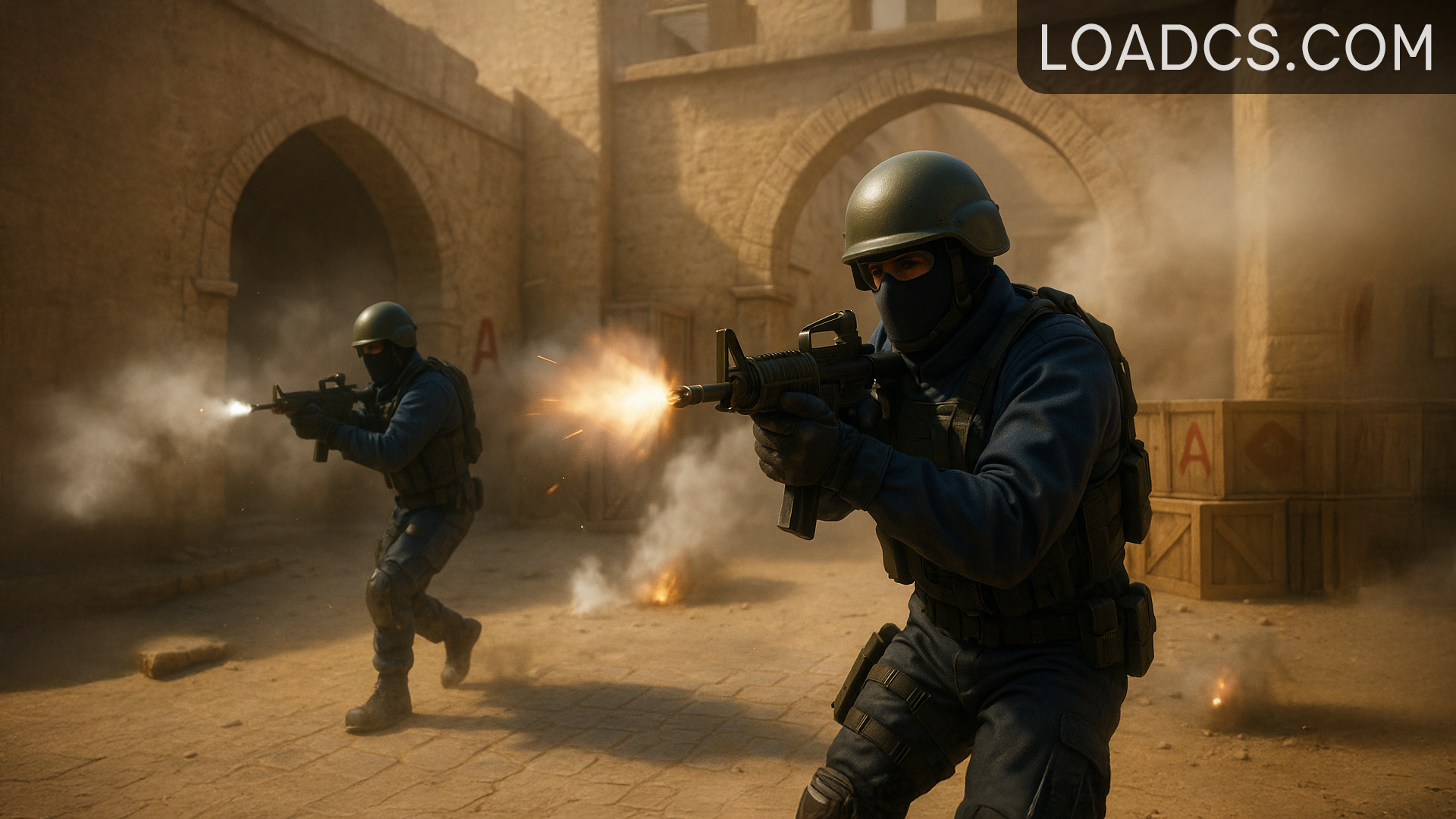
CS:GO and CS2 industrialized what 1.6 discovered: defaults to gather info, late-round site hits with layered utility, anchor vs. rotator roles, and equal parts star-fragging and supportive glue. But 1.6 adds a rawness that many veterans still prefer: muzzle flashes that obscure for a heartbeat, smokes that are more about denial than geometry puzzles, and a stricter punishment for moving while shooting. It forces you to earn stillness before you earn the frag.Maybe the purest bit of game design in CS is the C4 timer. Every beep is a tempo mark. It makes cowards brave and heroes patient. You plant, you fall back to a crossfire, you let the clock do defense’s work. If CTs smoke the bomb early you don’t panic—you burn their kits with a pop-flash and a swing. If they fake the defuse, you resist the scream in your hands and peek late. The bomb creates story beats without a single cutscene. That’s why strangers remember round numbers from years ago like they’re birthdays.
Clarity of purpose. No gimmicks. You can explain the entire game to a new player in one minute, then spend a decade mastering it.
Community ritual. Same maps, same calls, same pistol metas—comfort without stagnation, because skill keeps resetting the conversation.
Mechanical honesty. If you died, you probably walked too loud, peeked too narrow, or shot while moving. That sting is addictive because it feels solvable.
Counter-Strike 1.6 is lean steak—no sauce, no garnish, just the flavor of decisions executed under pressure. If you’re new, treat it like a craft: learn head-height, learn when to stop, learn to trade, learn the bomb. If you’re a veteran, you don’t need convincing. You know that the best rounds end with four people alive, a defuse with one second left, and a team quietly resetting utility for the next call—because in CS 1.6, the most beautiful thing isn’t a montage shot. It’s five players doing the simple thing perfectly.
Publication date: 2025.09.27
Views: 2746
Add a comment